How to choose a TikTok Shop agency
Choose a partner that is an official TikTok Shop Partner, runs the whole channel, can show results in your category and reports on sales. Here is what to check, and what to ask on the first call.
An honest way to choose, from an agency
Every guide to choosing a TikTok Shop agency is written by an agency, and this one is no exception, so it is worth saying what we are trying to do with it. The checks below are the ones we would want a brand to run on us, and the questions at the end are the ones we would rather be asked on the first call than discover a client wished they had asked on the last. The channel has enough agencies now that a brand can afford to be demanding, and the demanding brands are the ones that end up with partners worth keeping.
The short version: choose a partner that is an official TikTok Shop Partner, runs the whole channel rather than one piece of it, can show consistent results in a category close to yours, reports on sales and margin rather than views, and is honest about what has to be true on your side for any of it to work.
What has to be in place before any agency can help
An agency can build a creator program, run lives, manage ads and operate the shop, but there are five things no agency can supply, and a brand missing them should fix that first, because the alternative is paying a retainer to discover the problem slowly.
1.A hero product that demonstrates on camera
The channel sells products a creator can show working in fifteen seconds. If the range has nothing like that, the first job is product selection or a bundle, not agency selection.
2.Margin that survives the channel
Platform commission, creator commission, processing, shipping, samples, returns and ads come out of every order. Most operators look for gross margins north of 60% before TikTok costs. An agency can tighten the economics; it cannot invent the margin.
3.Inventory depth and a fulfillment answer
A creator video that hits can sell weeks of volume in days, and a stockout at that moment loses the sales and the creators. The brand needs stock to absorb a spike and a fulfillment setup that keeps shipping on time, because late shipments hold a new shop at its probation caps.
4.Someone who can say yes within a day
Sample approvals, rate changes, creator questions and content feedback run weekly. An agency can hold delegated authority for most of it, but the brand has to be willing to delegate, and whoever retains sign-off has to be reachable.
5.Appetite for volume
The program works at scale: hundreds of samples, dozens of creators posting, a steady stream of content the brand will not have approved line by line. Brands that want to review every video at that volume are not ready for the channel, and an honest agency will say so.
What a TikTok Shop agency should run
Sales on TikTok Shop come from five pieces of work that feed each other, and the reason coverage matters is the feeding, not the list. Creator videos that convert become the ads; lives move stock during campaigns and get cut into content; shop operations decide whether a spike in orders ships on time or stalls the shop at a probation cap. An agency that runs one piece can be excellent at it and still leave the brand without anyone accountable for the sales number.
How we run each one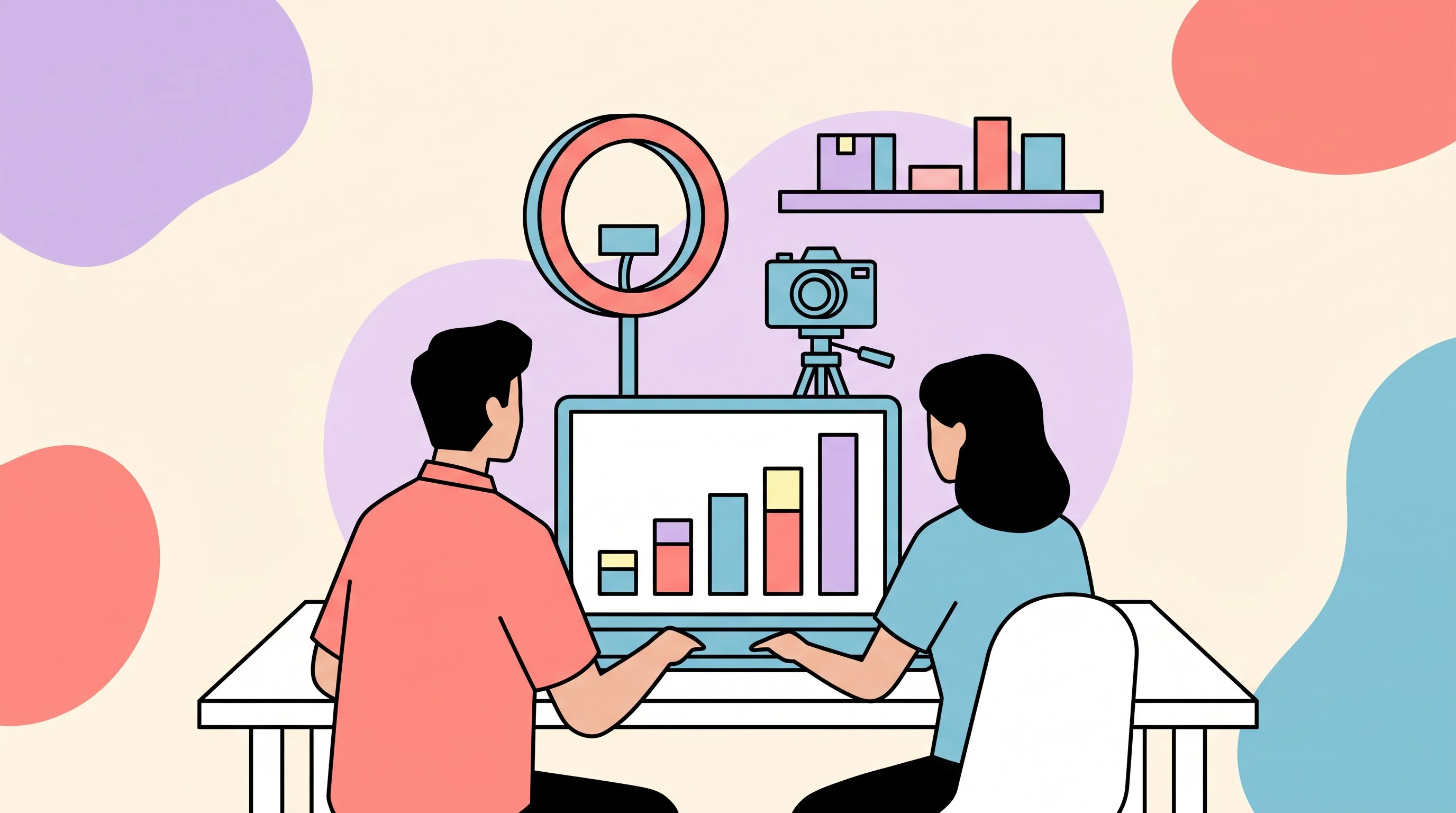
| Workstream | What it covers | Why it cannot be separated from the others |
|---|---|---|
| Shop operations | Listings, pricing, promotions, inventory, compliance and fulfillment performance in Seller Center | Fulfillment and listing health decide probation tier, search placement and whether creators keep tagging the product |
| Affiliate creators | Outreach, sampling, briefs, rate management, creator support and retention at volume | Produces the content everything else runs on |
| Paid media | GMV Max and boosting behind creator and brand content, budget and ROI management | Only works when there is content to amplify and attribution data to learn from |
| Live shopping | Hosted lives with trained hosts, live-only offers, creator hosts, a cadence that sells | Converts the audience the content built and generates cut-down content |
| Branded content and retainers | Videos for the brand's own account, and paid creator retainers with usage rights | Fills the gap for products affiliates will not choose yet, and feeds Meta |
Seven things to check before you sign
Each check comes with the question to ask and with what a good answer sounds like, because the question alone is easy to answer well.
1.Official TikTok Shop Partner status
TikTok approves agencies as TikTok Shop Partners (TSPs) and lists them in Seller Center under Apps & Services. A TSP works in your shop through an authorization you grant for up to a year, with permissions you choose.
Ask: are you a TikTok Shop Partner, and which permissions do you need in our Seller Center?
A good answer names the status, the permissions and why each one is needed. A vague answer about being a TikTok partner usually means an ads partner, which is a different thing.
2.Coverage of the whole channel
Ask: which of the five workstreams do you run yourselves, which stay with us or another partner, and who is accountable for the GMV number?
A good answer is specific about the split and names one owner for the result. Be wary of an answer that lists every service and then turns out to subcontract most of them.
3.Consistent proof in your category, with the attribution explained
Ask for results in a category close to yours, with the starting point, the time frame and how the number was measured. Then ask the question that separates operators from marketers: how much of that GMV was attributed to creator content versus the shop's total sales, and how much came from the top few creators or the best single month? A result from a true cold start tells you more than growth on a shop that was already large, and a result spread across many creators and many months tells you more than one viral month. Ask whether you can speak to the client. Specifics are often under NDA, and a good agency says so and offers a reference call instead of a number it cannot back.
4.A plan for the first 90 days, before you sign
Ask: what would you do in our first 30 days, and what should we expect by day 90?
A good answer starts with product selection and offer architecture, sequences content before creators before lives before ads, sets a creator volume target rather than a GMV promise, and says what month two will do with what month one learned. A plan that leads with ad spend or a GMV figure is a warning.
5.How they find, vet and keep creators
Ask: how do you find creators for our products, how do you decide which ones to invest in, and what happens week to week?
A good answer talks about consistency over headline numbers (the share of a creator's videos that actually sell, not one viral post), about screening out AI and virtual accounts, about audience fit rather than category fit, and about a retention program with briefs, webinars, events and rate upgrades. Ask specifically how many creators in their network posted for any client in the last 30 days; a large network that is mostly dormant is a database, not a community.
6.Reporting tied to sales and margin
Views and follower counts are easy to grow and impossible to bank.
Ask: what will you report every week, and how will we judge whether this is working?
A good answer reports GMV split by source (affiliate, brand content, live, ads), contribution margin after the channel's costs, creator output (samples shipped, posts, share of creators posting), and the earning rate of the roster, with a weekly call to agree next steps. If margin is not in the report, the agency is optimizing for a number you cannot deposit.
7.The team on your account
Ask: who exactly works on our account, how many other brands does each of them manage, and where are they based?
A good answer names roles (an account lead, a creator manager, an operations manager, and someone senior who reviews the portfolio) and gives a ratio of accounts per person that leaves room for your weekly rhythm. The number that matters is not headcount but how many shops your account lead is also running.
How agencies charge, and what each model does to incentives
Most TikTok Shop agencies charge a monthly management fee plus a percentage of GMV, with the program's direct costs (sample product, creator retainers, ad spend, live studio hours) billed separately as they are incurred. Published management fees in the market tend to start in the mid single-digit thousands per month, with GMV commissions in the mid single digits as a percentage, and commitments of around six months, which is roughly the time it takes for a program to move through its test-and-apply cycle twice. The structure matters more than the exact numbers, because each model pulls the agency's attention in a different direction.
| Model | How it works | What it does to incentives | When it fits |
|---|---|---|---|
| Fee plus GMV commission | A monthly fee covers the team; a percentage of GMV is earned on every sale from the start | The fee funds the weekly rhythm regardless of early results; the commission keeps the agency's attention on sales rather than activity | Most brands, cold starts included; the balance works when the fee is modest and the commission is real |
| Commission only | No fee; the agency earns a larger percentage of GMV | Attractive on paper, but the agency is paid only by volume, which pushes toward discounting and toward the brands already selling; cold starts get the least attention | Established shops with strong organic sales that want a partner for scale |
| Flat fee only | A monthly fee with no sales component | Predictable cost, but nothing ties the agency to the result; reporting tends to drift toward activity and views | Brands that want a defined scope (operations only, for instance) and will hold the agency to a sales target themselves |
| Per-project or per-launch | A fixed price for a launch, a campaign or a content batch | Clean for a defined deliverable; poor for a channel that compounds, because nobody owns month four | A single launch or a content package, especially for small brands testing the channel |
Three things to look at in any proposal. First, what sits a la carte and what the brand controls: sample product is usually the brand's cost, creator retainers are priced per video or per batch with a markup disclosed or not, ad spend runs in the brand's own account or the agency's, and the proposal should say which before a dollar moves. Second, where launch discounts land: a fee reduction for the first months is reasonable for a cold start, but a GMV commission that is waived or deferred removes the one incentive that keeps the agency pointed at sales, so a discount should come off the fee and not the commission. Third, the commitment term and what ends it: six months is common and defensible, a longer term should come with a performance clause, and a term shorter than three months means the brand is paying for the test without the result.
For smaller brands the market has started to package the channel as a pilot: a reduced management fee and a higher GMV percentage, a creator retainer producing a defined batch of videos with usage rights the brand keeps, a sampling minimum and a modest ad budget from the second or third month. The logic is that even if the channel does not take, the brand keeps a library of content it can run elsewhere, and that is a reasonable way to buy an answer to whether TikTok Shop works for a product without committing to a full program first.
Red flags to walk away from
The questions that make agencies uncomfortable
The seven checks above are the ones every guide lists, and good agencies have polished answers to them. These are the ones that separate a partner from a pitch, and we would rather be asked them on the first call.
1.What share of your affiliate GMV came from your top five creators last month?
The answer tells you whether the agency builds programs or rents a few stars, and whether their results would survive those creators leaving.
2.How many of the creators in your network posted for any client in the last 30 days?
A network is only as large as its active share.
3.What is your client churn, and why did the last two clients leave?
Every agency loses clients. The useful information is whether the agency knows why.
4.Who else is on my account lead's book?
Not headcount. The specific person and their load.
5.What is the first thing you would tell us not to do?
An agency that has run enough programs has a list. One that does not is selling, not advising.
6.What has to be true on our side for this to work, and what happens if it is not?
The honest answer names margin, inventory, decision speed and content appetite, and says what the agency does when one of them is missing.
7.How do you measure a creator before you invest in them?
The answer should mention consistency, not just headline GMV, and should include something about screening for AI-generated and virtual accounts.
8.What happens to the creator relationships if we leave?
The brand should know in advance whether it walks away with a roster, a list, or nothing.
How Spotlight Media measures up
We built this checklist from the questions brands ask us. Here is how we answer them. For a full launch story, read our POV Beauty case study.
- Partner status
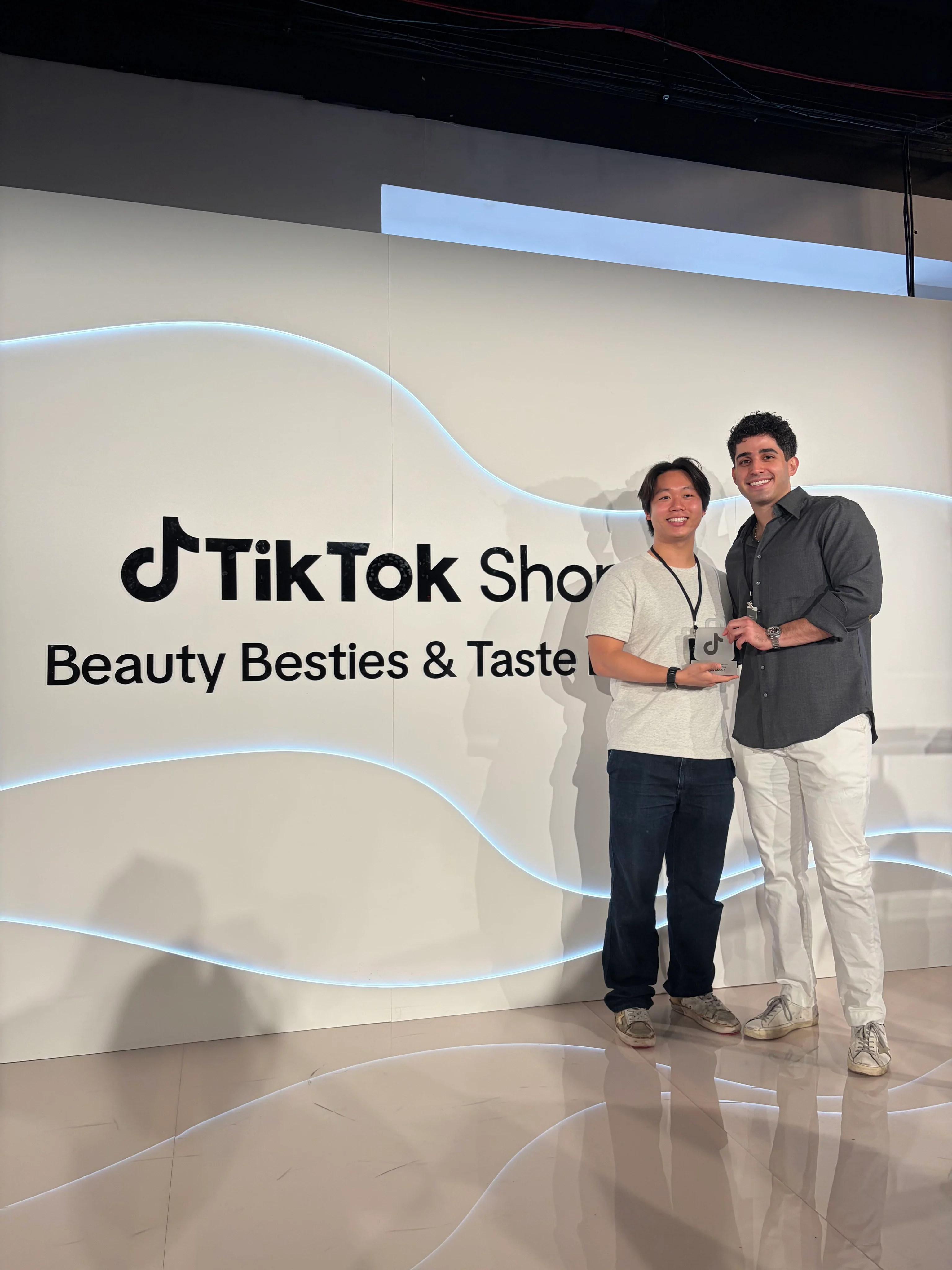
- Became one of the first certified TikTok Shop Partner agencies in 2023, and is TikTok Shop's Rising Star Partner Agency (Beauty category, 2026).
- Coverage
- Shop management, affiliates, creator retainers, paid media, LIVE shopping and branded content, run by one team.
- First 90 days
- A 30-60-90 day roadmap and weekly strategy calls, starting with the products most likely to sell.
- Creators and control
- You approve every retainer video before it posts, and Meta ads run in your own account.
- Team
- Headquartered in New York, with a base in Los Angeles.
$60M+
in TikTok Shop sales (GMV) driven for our brands
30+
brands cold-started on TikTok Shop since 2025
Hiring an agency, answered
Want the detail on what we do? See our services, or read our guide to TikTok Shop affiliate marketing.
Talk to a TikTok Shop Partner
Tell us where your shop is today. We'll show you how we would answer every question on this list for your brand.
Work with us