TikTok Shop affiliate marketing for brands
Creators tag your products in their videos and LIVEs and earn a commission you set, from 1% to 80%, on each sale. Here is how the program works, and how to set it up so the right creators keep posting.
Affiliate content is the sales engine, and the program is a funnel
On TikTok Shop, creators tag your products in their videos and lives and earn a commission you set, from 1% to 80%, on each sale credited to their content. That sentence describes the mechanism, but it hides the operating reality, which is that an affiliate program is a funnel with five stages and leaks at every one of them: creators have to find or be invited to your product, request or accept a sample, receive it quickly, post about it, and then post about it again. Most brands measure the first stage (how many creators joined) and the last (how much GMV came in) and never look at the middle, which is where the program is won or lost.
The second thing the mechanism hides is how concentrated the results are. In any affiliate program, a small share of the creators who post drive the large majority of the sales, and you cannot tell in advance which creators those will be. That single fact shapes everything below: the roster has to be large enough that the few who hit are statistically likely to be in it, the sampling process has to be efficient enough that a large roster is affordable, and the retention effort has to focus on the creators who have already proven they convert.
How the program works
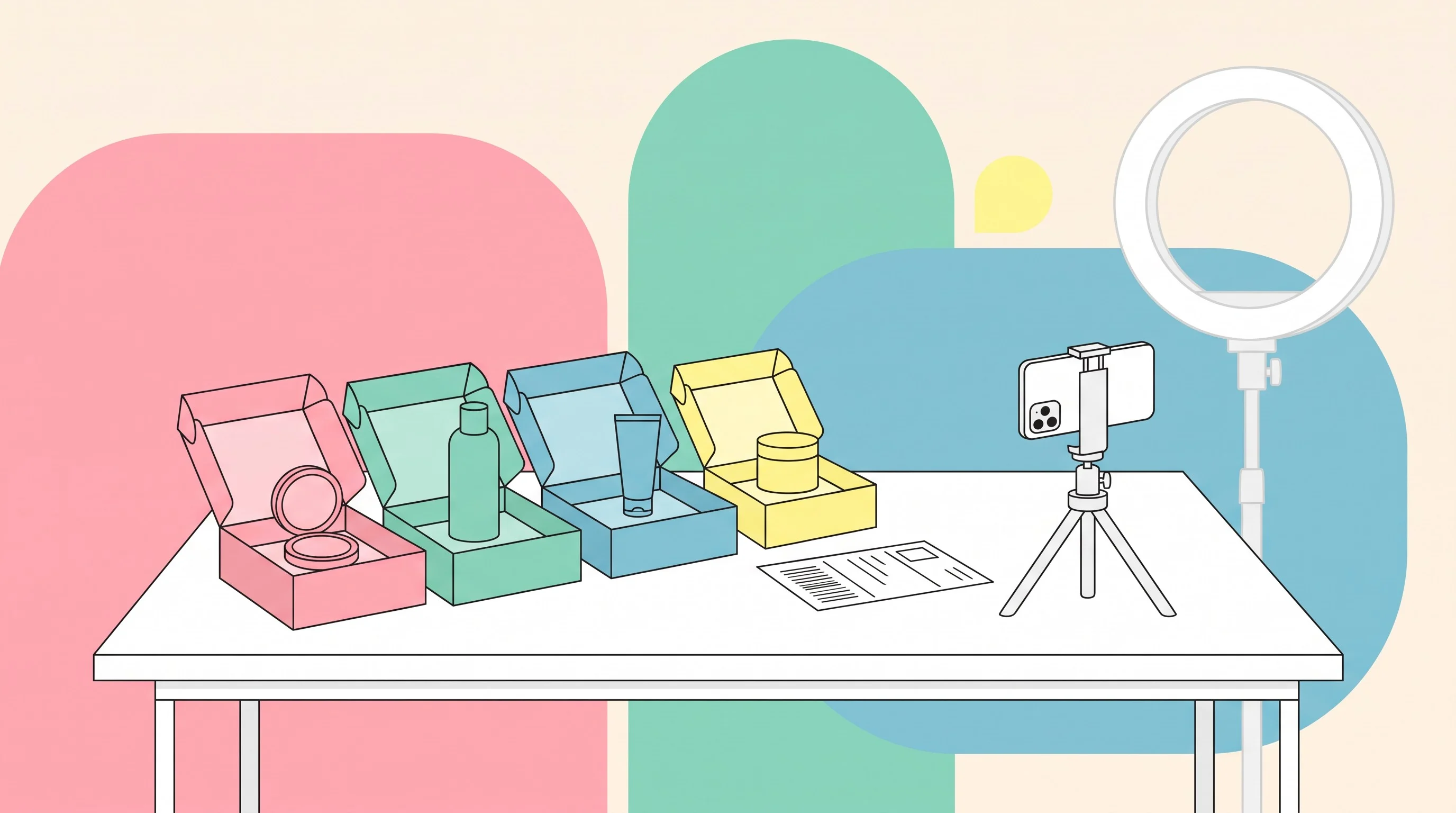
Sellers run the program from the Affiliate Center in Seller Center. You choose which products are available, set the commission on each, decide who can request a free sample, and manage the creators who join. Every sale is attributed to the specific video or live that produced it, which is what makes the data useful: you can see not just which creators sell, but which pieces of content do.
Still setting up the shop? Start with how to sell on TikTok Shop.
Sources: TikTok Shop Seller University, Setting up affiliate collaborations and How to set up and manage samples.
Open collaboration
Open collaboration makes your products visible to every creator on the affiliate marketplace at a rate you set per product, per group or across the range. You can require approval so only creators you accept take part, and most brands should, because an open program with no gate fills with creators who request samples and never post.
Target collaboration
Target collaboration sends an invitation to specific creators for specific products, usually at a higher rate. A target rate always overrides the open rate for that creator, which is the mechanism for rewarding the people who have already sold your product without raising the rate for everyone.
Free samples
Free samples are paid for by you: the product, the shipping and the tax. The Sample Settings page lets you gate requests by content category, follower count, sales history and shoppable content volume, and those gates are the first filter on who gets product. Set them too loose and the sample budget goes to creators who will never post; set them too tight and the roster never grows.
Refundable samples
Refundable samples have the creator buy the product with 90 days to meet your posting criteria, after which it counts as a normal purchase. They are useful for higher-value products where free sampling at volume would be expensive.
Shop Ads commission
Shop Ads commission is an optional separate rate for orders that come from ads run on a creator's video. If you do not set one, those orders pay the creator's standard rate.
Setting commission rates you can sustain
The rate is the first thing a creator sees and the first thing brands get wrong, usually by copying a competitor rather than working back from their own margin. The right order is the reverse: start from the gross margin on the product, subtract the platform commission, processing and shipping, decide what contribution you need per order, and what is left is the ceiling for creator commission plus sampling and ads. In competitive categories the market has settled into a range (open rates of roughly 10-20% in beauty and personal care, with targeted rates for proven creators running higher), and if your ceiling sits below the bottom of that range the problem is the product economics or the price point, not the rate.
Three things about rates that the Seller Center interface does not tell you.
Your stated rate is not your effective rate
Returns claw back the commission but not your fulfillment cost, so a 20% rate on a product with a meaningful return rate costs you noticeably more than 20% of the revenue you keep. Model it with your real return rate before deciding the number.
Rates can go up but should not come down
Creators compare rates across brands constantly, and a brand known for lowering its rate loses creators faster than one that never raised it. Set the open rate at a level you can hold, and use target rates to reward rather than the open rate to attract.
One rate per product, and the target rate wins
A creator is paid one rate on each product, and a target invitation overrides the open rate. The practical structure is an open rate everyone can earn, a higher targeted tier for creators who have already converted, and bundles priced so the creator's commission on the bundle is visibly better than on the single unit.
The sampling funnel and where it leaks
Sampling is where most of the program's cost sits and where most of its upside is decided, and it only works as a funnel if every stage is measured. The stages, with TikTok's own deadlines where they apply, are below.
| Stage | What happens | The deadline or norm | Where it leaks |
|---|---|---|---|
| Request | A creator requests a sample through open collaboration, or accepts a target invitation | Requests expire if not reviewed within 7 days | Gates set too loose fill the queue with creators who will not post; too tight and the roster starves |
| Approve | The brand reviews and approves the request | Within days, not weeks; auto-approval for invited creators | Slow approval loses the creator to a competitor who shipped first |
| Ship | The product goes to the creator | Within 7 days of approval | Slow or wrong shipments; creators receive a product and have forgotten why they asked for it |
| Post | The creator films and publishes product-tagged content | Creators are asked to post within 14 days of receipt | No brief, no follow-up; most sampled creators never post, and the share that does is what the brand controls |
| Post again | The creator returns to the product | No platform deadline; this is retention | Nothing new to say, no rate upgrade, no relationship |
Across a large program, the share of sampled creators who post is the number to manage, and the levers that move it are not mysterious: speed at the approve and ship stages, a brief that tells the creator the two or three angles that are already working so they do not have to guess, and a follow-up message when the product lands. Brands that treat sampling as a shipping task get the low end of the posting range; brands that treat it as the top of a relationship get the high end, and the difference compounds because the creators who post once are the pool from which the repeat posters and the top earners come.
The order of operations for setting the program up is the one TikTok's own guidance implies, with two additions from running it at scale: pick the hero products first, set rates from margin second, open the collaboration with samples and sensible gates third, send targeted invitations to creators who fit the category and the audience fourth, approve and ship fast fifth, put a boosting layer behind the videos that convert sixth, and keep creators posting seventh. The two additions are that the roster has to be built at volume from the start, not grown cautiously, and that the brief is written before the first sample ships.
Which creators actually sell, and how to tell
Headline GMV is the wrong number to pick creators on. A creator whose 30-day figure comes from one video that went viral is a different proposition from one whose figure comes from thirty videos that each sold a little, and the second creator is the one you want in the program, because consistency is what a brand can plan around. When we vet creators we look at two things beyond the headline: the share of a creator's recent videos that produced any sales at all, which we call the earning rate, and how much of their recent GMV came from their single best video, which tells you whether the headline is a pattern or an outlier. A high earning rate with low concentration is a seller. A low earning rate with high concentration is a lottery ticket, and the program should have a few of those but should not be built on them.
Two further filters matter in 2026. The first is that a growing share of marketplace accounts post AI-generated or virtual content, and while some of it sells, it is not the creator relationship a brand thinks it is buying, so every creator on a shortlist gets a manual look at their recent posts. The second is audience fit rather than category fit: a creator who sells skincare to one audience will not necessarily sell it to yours, and for brands with a specific customer (a kids and family brand, a complexion brand with a particular shade range) the creators who have already succeeded with that audience outperform category creators with bigger numbers.
Creator tiers and the 40/40/20 mix
TikTok Shop creators are not interchangeable with influencers, and the difference is economic. A creator with a modest following who is already selling on the platform has close to zero opportunity cost for posting another product video, so a guaranteed fee for a batch of videos is attractive to them in a way it would not be to an Instagram creator with a rate card. That is what makes a two-tier program possible.
| Tier | Who they are | What they do best | Typical cost per video |
|---|---|---|---|
| L0-L2 | Smaller accounts, often high quality, with smaller followings | Volume: many videos of the same brief with different hooks, which is how a brand tests angles fast | Low; batches of 10-30 videos for a flat fee |
| L3-L4 | Established sellers with reliable conversion | The middle of the program: consistent earners who respond to target rates and briefs | Mid; priced per video |
| L5-L6 | Top sellers with reach | Anchors: fewer videos, bigger impact per piece, the names that make other creators take the product seriously | High; priced per video, and worth it only for proven products |
For a cold start or a product that is not yet converting, we run a paid creator retainer alongside the commission program, mixed roughly 40% high-potential L1-L2 creators, 40% L3-L4 and 20% L5-L6. The volume tier produces the raw material for creative testing, the middle tier produces the reliable earners, and the anchor tier produces the reach once an angle is proven. Every creator in the retainer gets the same two or three concepts in the brief; the smaller creators produce twenty-plus variations with different hooks, the larger ones interpret the same concepts with more freedom, and after the first month the angles that worked get doubled down on and the rest dropped. That is why we prefer a two to three month minimum on retainers: month one is the test and month two is where the learnings get applied, and a one-month retainer is paying for the test without the result.
For established brands whose products already convert on commission, the retainer is usually unnecessary and the money is better spent on sampling volume, target rates for proven creators and the retention program below. The question to ask is whether creators are already choosing the product; if they are, pay them more to keep choosing it rather than paying others to try.
Affiliates or retainer creators?
They do different jobs. Affiliates film what already sells. A retainer gets content made for the products that do not sell yet, and the videos that work bring more affiliates in.
How creator retainers workHow they are paid
- Affiliates
- A free sample and a commission on each sale from their videos.
- Retainer creators
- A fixed fee for an agreed set of videos, on top of commission.
What you control
- Affiliates
- The products, the rate and who gets a sample. A free sample buys a post, not a message.
- Retainer creators
- Content volume, quality and timing. You approve every draft before it goes live.
Where they fit
- Affiliates
- Products that already convert. Creators pick what is selling, because that is where their commission is.
- Retainer creators
- New shops, new products and products that need explaining.
Keeping creators posting
Affiliates choose what to film each week, and they choose the products that are selling, that they understand, and whose brand they hear from. Retention is therefore less about incentives than about information and attention, and the programs that keep creators posting do a handful of things consistently.
A brief that does the thinking for them
Two to four concepts, the hooks that are already working in your ads and lives, the claims they can and cannot make, and what to show in the first three seconds. The brief matters more than the creator's expertise; a skincare creator does not need to be a dermatologist to sell well, they need the right talking points delivered clearly.
A reason to come back
New products, limited bundles, a seasonal angle, a target rate upgrade for creators who have converted. The creators who have sold once are the cheapest audience you have, and a message telling them what is new is worth more than a cold invitation to someone who has not.
Webinars and lives for creators
A founder or product lead on a live call with the creator community, walking through the product and answering questions, produces a wave of informed content in the following week. The brands that do this well treat it as a recurring event rather than a launch stunt.
Events and a VIP tier
Dinners, studio days and in-person shoots for the top creators turn a transactional program into a relationship, and the top tier is where the loyalty pays off, because those are the creators competitors are also trying to recruit. For cosmetics brands, a VIP live program works especially well: top live creators get full shade-range kits for shade-matching lives, with a live-only flash offer, and the live itself gets cut down into content afterwards.
Someone they can reach
A creator with a question about a sample, a rate or a claim needs an answer within a day, and the brands that provide that are the ones creators keep filming for.
Putting ads behind affiliate videos
The affiliate program and paid media are one system, not two. Every creator video is a creative asset, the attribution data tells you which ones convert, and GMV Max is built to take a budget and distribute it across your own content, affiliate videos and lives toward a sales target. Three practices make the combination work.
Boost at volume, not selectively
The instinct is to put spend only behind the videos that already sold, and that is right for scaling, but for discovery it misses the point. A light boost behind every new creator video, a small daily budget for two or three days, gives each piece a fair test and turns the program into a volume game where a video that would never have found its audience organically gets a chance. Across a few hundred videos this is not an expensive layer, and it is where a surprising share of the winners come from.
Sequence it after the content exists
GMV Max needs conversion history and a base of videos; switched on in week one it learns nothing and spends the budget doing it. The right moment is when affiliate content is converting organically and the brand account has a base of shoppable posts.
Decide the Shop Ads commission deliberately
Orders that come from ads on a creator's video can pay a separate rate. Leaving it at the standard rate keeps creators happy and keeps the attribution simple; setting a lower rate improves the ad economics but creators notice. Most brands are better off leaving it alone until the program is mature.
When a brand wants content it fully controls, with usage rights for its own account and for Meta, the retainer program above is the route, and the retainer videos go into the same boosting layer.
How Spotlight Media runs affiliate programs
We are an official TikTok Shop Partner, and we run affiliates as part of the whole channel, next to shop operations, paid media and LIVEs. Comparing partners? Read our guide to choosing a TikTok Shop agency.
- Creator matching
- We match your products with creators from our L3+ creator community on TikTok Shop.
- Outreach and sampling
- We handle outreach and sampling, then manage the affiliate relationships week to week.
- Community
- We keep creators posting through webinars, events and one-to-one support.
- Proof
- Full-scale affiliate management, viral product incubation and 100 hours of LIVEs a month took Pavoi from $0 in revenue to the #1 jewelry brand on TikTok Shop.
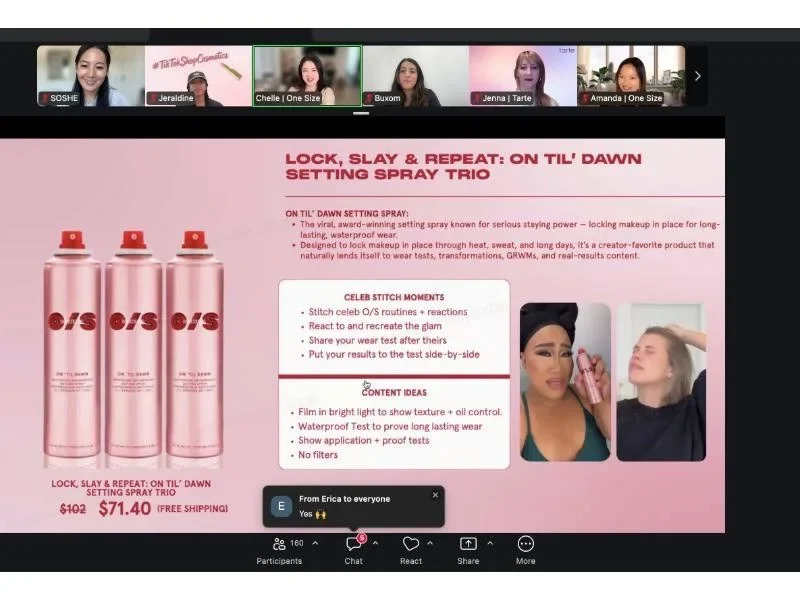
236
creators joined one live webinar for a beauty brand, our largest to date
300K+
creator videos and LIVEs produced
Affiliate marketing, answered
Need content you control? See how creator retainers work.
Get creators selling your products
Tell us where your shop is today. We'll show you how we would find, sample and manage affiliates for your range.
Work with us